


Innovative Platforms
Very severe diseases are affecting the world’s population, particularly devastating those populations with low resources. They have not been able to be controlled particularly in the Low and Middle Income Countries, with the current approach, and that is why it is necessary to think differently and look for innovative alternatives to eradicate them.
- Malaria: globally in 2023, there were an estimated 263 million malaria cases and 597,000 malaria deaths in 83 countries.
- Rotavirus: diarrhea is a leading cause of childhood mortality in developing countries, accounting for an estimated 600,000 to 870,000 deaths annually.
- Cancers: As an example, in 2022, there were 2.3 million women diagnosed with breast cancer and 670,000 deaths globally. Global estimates reveal striking inequities in the breast cancer burden according to human development
Types of Innovative Platforms and their advantages
Innovative platforms using animals like bovines or plants like rice offer a high-tech alternative to traditional medicine production.
They have significantly lower costs, making treatments more affordable and accessible to a broader population.
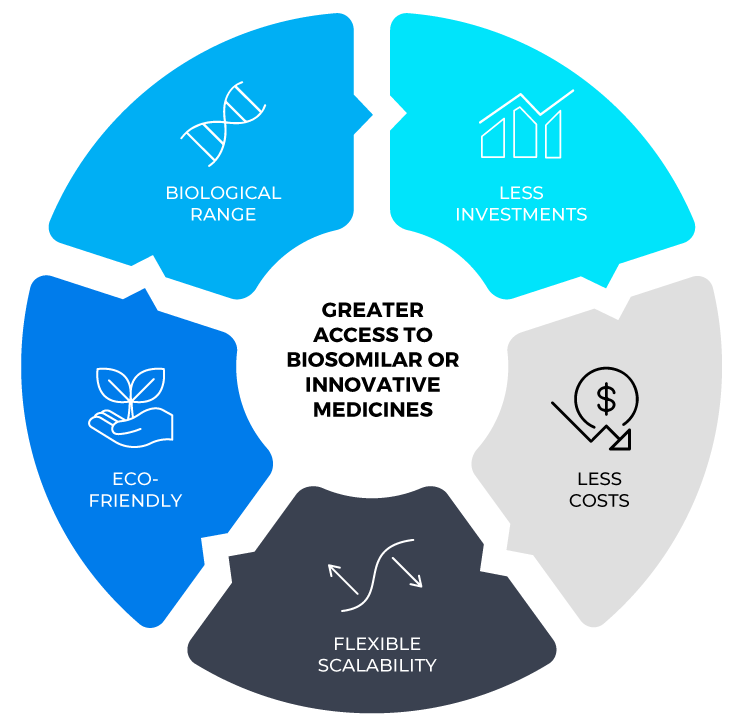
Key Advantages of Innovative Platforms
- Lower infrastructure investment: No need for large-scale facilities—simple setups for animals or plants are enough.
- Cost savings: Significantly reduced production costs.
- High Scalability: Flexible systems allow rapid adjustment of production volumes.
- Broad biological range: Capable of producing everything from biosimilars to novel molecules.
- Eco-friendly technologies: Environmentally sustainable technologies.
Genetically Modified Bovine (GMB) Innovative Platform
Since the cloning of Pampa Mansa — the first cow obtained through this technique in Latin America — Biomill has been at the forefront of using GMB as bioreactors. This approach leverages the animals as highly efficient biological platforms to produce pharmaceutical products.
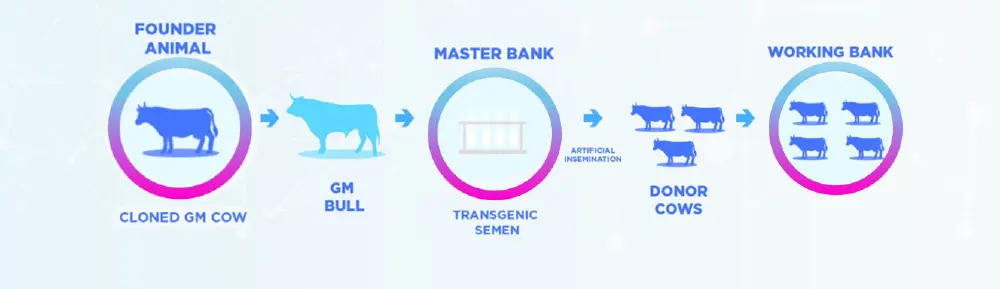
The GMB Platform is now a reality, built upon advanced biotechnological methods. It begins with the generation of a Founder Animal (FA) through transgenesis and cloning. This animal is specifically engineered to express high levels of a target protein in its milk.

From the FA, a Genetically Modified Bull is produced via artificial insemination. The semen from this bull forms the basis of the Master Transgenic Bank.
Using this semen, a population of Genetically Modified Cows is established through further artificial insemination. These cows, collectively known as the Working Transgenic Bank, are milked to harvest protein-rich milk, which serves as a raw material for pharmaceutical production.
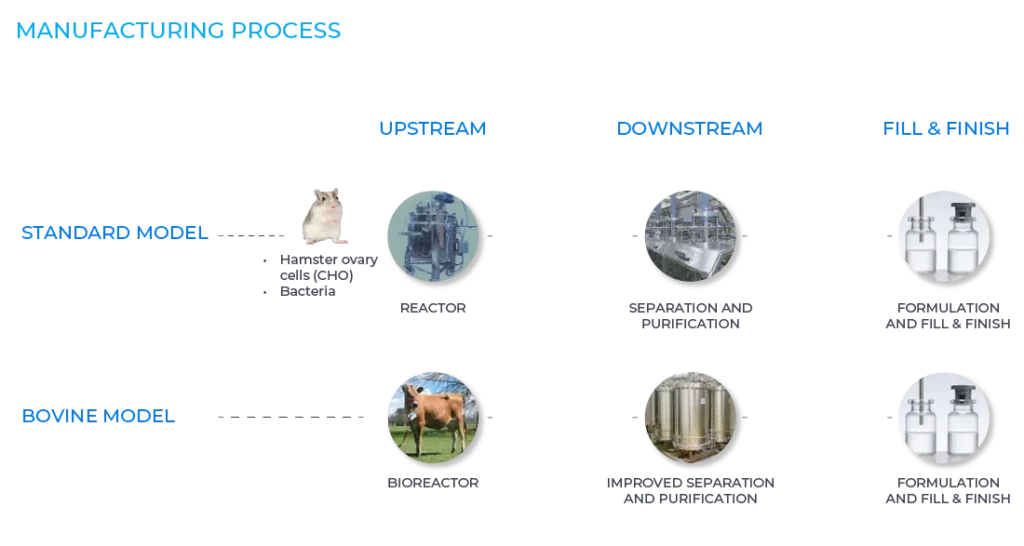
There are several pharmaceutical products already launched in core markets worldwide, produced using Innovative Platforms:
